
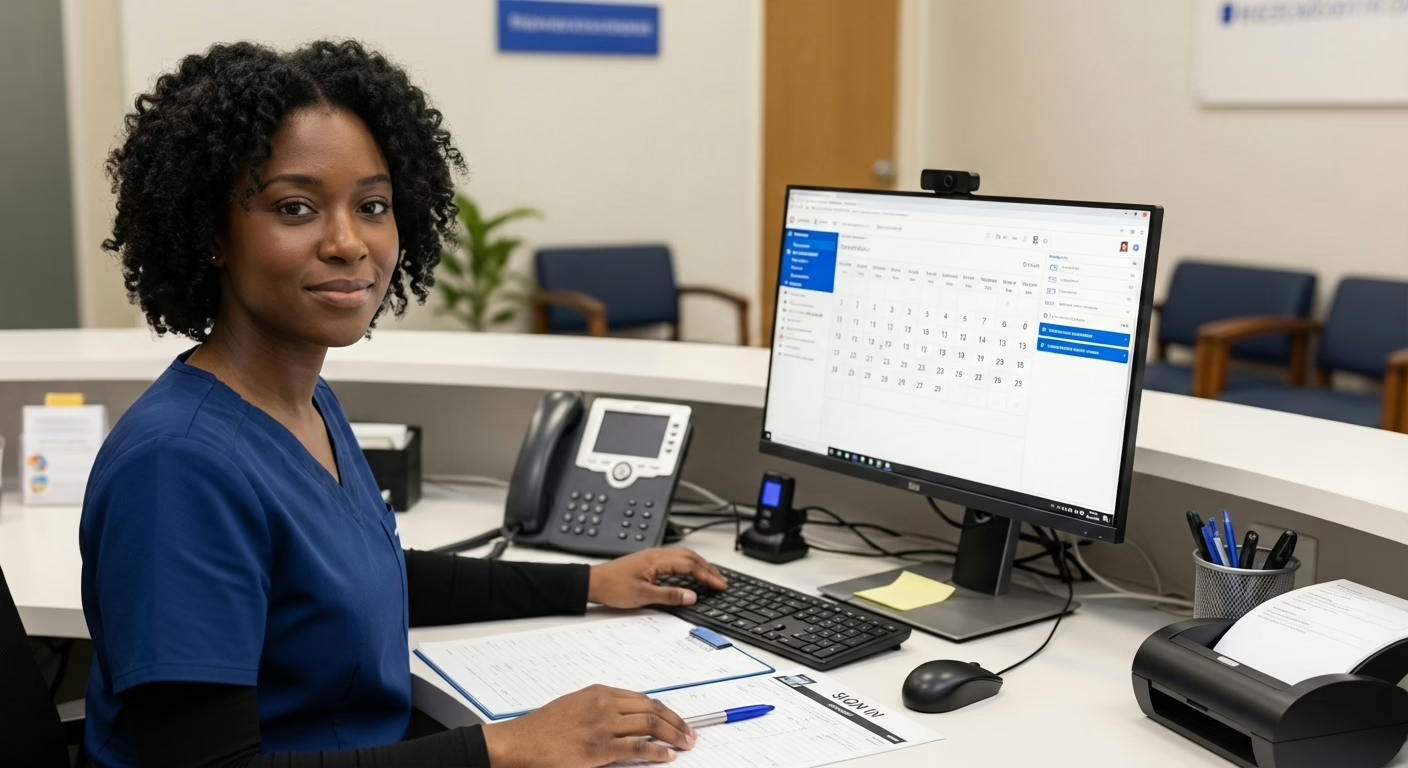
If you walk into a typical busy medical office at 8 a.m., you may see phones already ringing, patients checking in at the front desk, someone calling to reschedule — and one person calmly handling it all.
That’s often the Medical Administrative Assistant.
They’re the first point of contact for patients, the steady hand behind scheduling, records, and communication, and the quiet force that keeps a healthcare office running smoothly from the moment the doors open until the last patient leaves. If you’ve ever wondered what medical administrative assistant duties really look like beyond “answering phones,” the day-to-day reality is far more dynamic — and far more important.
Understanding the Medical Administrative Assistant Role
Medical administrative assistants sit at the intersection of people, paperwork, and patient care. They handle the administrative side of healthcare, allowing providers to focus on clinical work and ensuring patients can move through their appointments without confusion or delay.
You’ll see them:
- Greeting patients and setting the tone for their visit
- Scheduling and adjusting appointments throughout the day
- Managing patient records and documentation
- Communicating with insurance providers and handling billing details
- Coordinating information between patients, providers, and office staff
Many students build these skills through hands-on training like the Medical Clinical Assistant diploma program at Valley College, where administrative knowledge is taught alongside real healthcare context so you understand not just what to do, but why it matters in a medical setting.
What a Typical Day Can Look Like
No two days are exactly the same, but there’s a rhythm to the role.
The Morning Rush
- Reviewing the day’s appointment schedule
- Confirming patient information
- Preparing charts or electronic records for providers
- Handling early phone calls from patients running late or needing changes
The Midday Flow
- Checking patients in and out of appointments
- Answering phone calls from patients with questions or requests
- Updating medical records and documentation
- Handling insurance forms and billing information [3]
- Coordinating follow-ups, referrals, or test results
The Unexpected Moments
This is where the job often becomes the most interesting.
- A patient forgets important paperwork and needs guidance
- A provider needs information quickly between appointments
- An insurance issue pops up that needs to be clarified before a visit
- A last-minute cancellation creates a scheduling puzzle to solve
- A nervous patient needs reassurance before their appointment
These moments call for calm problem-solving, empathy, and quick thinking — and they’re a big part of what makes the work engaging rather than repetitive.
Wrapping Up the Day
- Ensuring records are complete and accurate
- Preparing for the next day’s schedule
- Communicating important updates to the healthcare team
It’s fast-paced, people-focused work that requires organization, communication, and attention to detail.
Skills That Make a Difference in This Role
Success in medical administrative assistant duties comes from a blend of soft skills and practical knowledge.
- Communication skills: Face-to-face conversations and phone calls are part of the daily routine
- Attention to detail: Accuracy matters when working with patient records and insurance forms
- Multitasking ability: Prioritizing tasks as new needs arise throughout the day [1]
- Medical terminology knowledge: Understanding the language of healthcare for clear documentation
- Technology comfort: Working confidently with electronic health records and office systems
These are the kinds of skills students practice in structured programs such as the Medical Clinical Assistant diploma program, which blends administrative training with clinical awareness.
Where You Might Work
Medical administrative assistants are needed in nearly every type of healthcare setting.
- Physician offices and clinics
- Hospitals and medical centers
- Specialty practices like pediatrics, cardiology, or dermatology
Some roles focus heavily on administrative coordination, while others blend administrative and clinical support. That versatility is part of why training that covers both sides of the job can open up more options after graduation.
How the Role Continues to Evolve
Healthcare is constantly changing, and medical administrative assistant duties evolve along with it.
- Electronic health records (EHR) systems have replaced paper charts
- Telehealth appointments require new types of coordination
- Insurance processes have become more detailed and complex
Medical administrative assistants help bridge the gap between patients, providers, and evolving systems, ensuring clear communication and organized care.
Why This Role Matters More Than People Realize
Patients may see only a few minutes of this work at the front desk, but behind the scenes, medical administrative assistants are constantly preventing problems before they occur.
They catch small documentation errors that could delay care. They make sure providers have the information they need before a patient walks into the room. They help patients feel less overwhelmed by explaining what happens next, where to go, or what paperwork is needed.
Over time, this role becomes more than a list of tasks. You start recognizing returning patients. You become someone people feel comfortable asking questions to. You’re part of a healthcare team that people rely on during stressful, emotional, or uncertain moments.
For many professionals, this is where the fulfillment comes from. You’re not just organizing schedules or managing records — you’re helping create a smoother, calmer healthcare experience for everyone involved while building a stable, meaningful career for yourself.